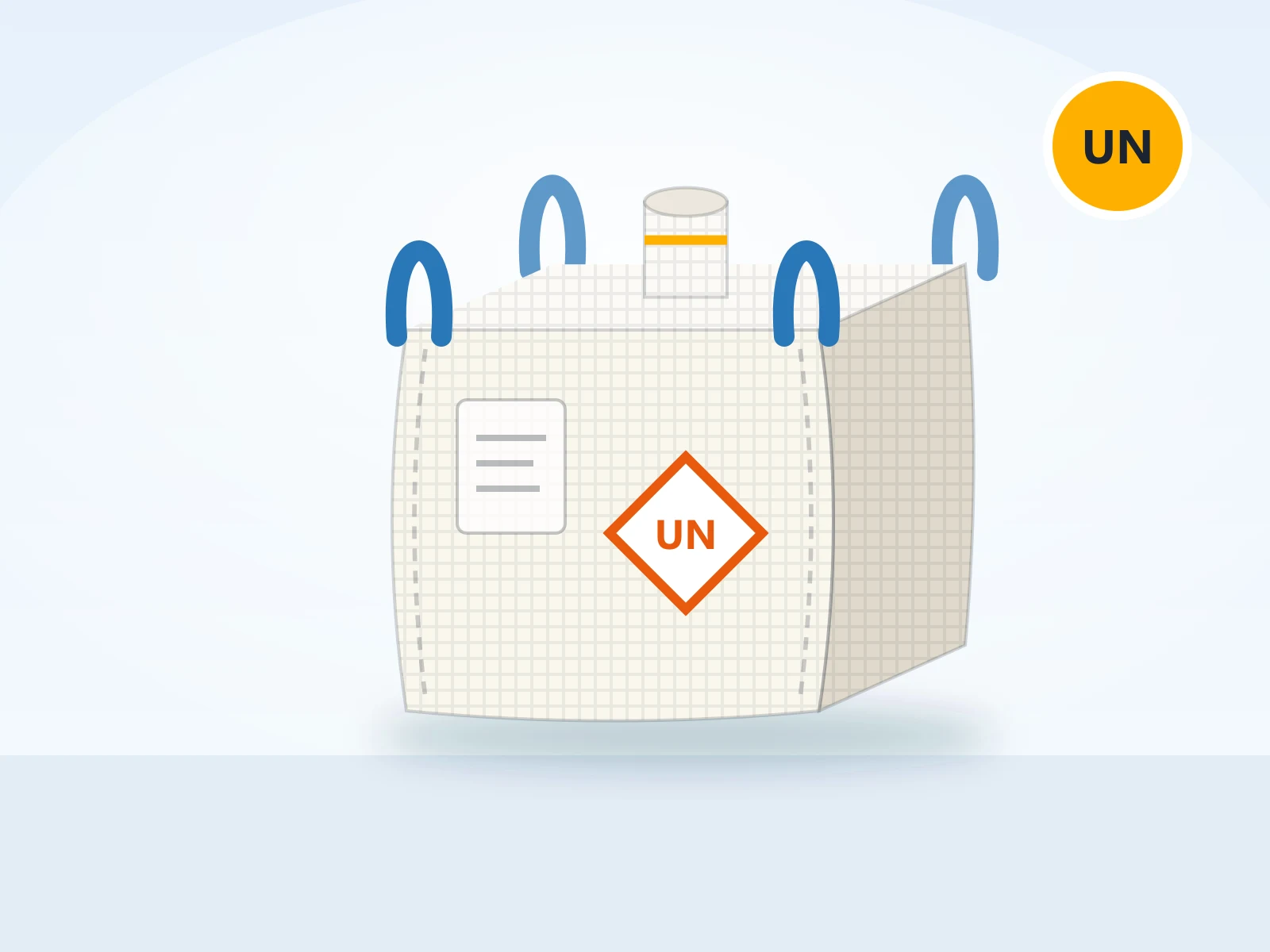
UN Rated FIBC
Bulk bags built and tested to dangerous-goods requirements for transporting hazardous solids.
View specifications for UN Rated FIBC →
Some materials need more than a standard bulk bag. Our specialty FIBCs address electrostatic risk, dangerous-goods regulation, fire, corrosion, pests and tampering.
Bulk bags built and tested to dangerous-goods requirements for transporting hazardous solids.
View specifications for UN Rated FIBC →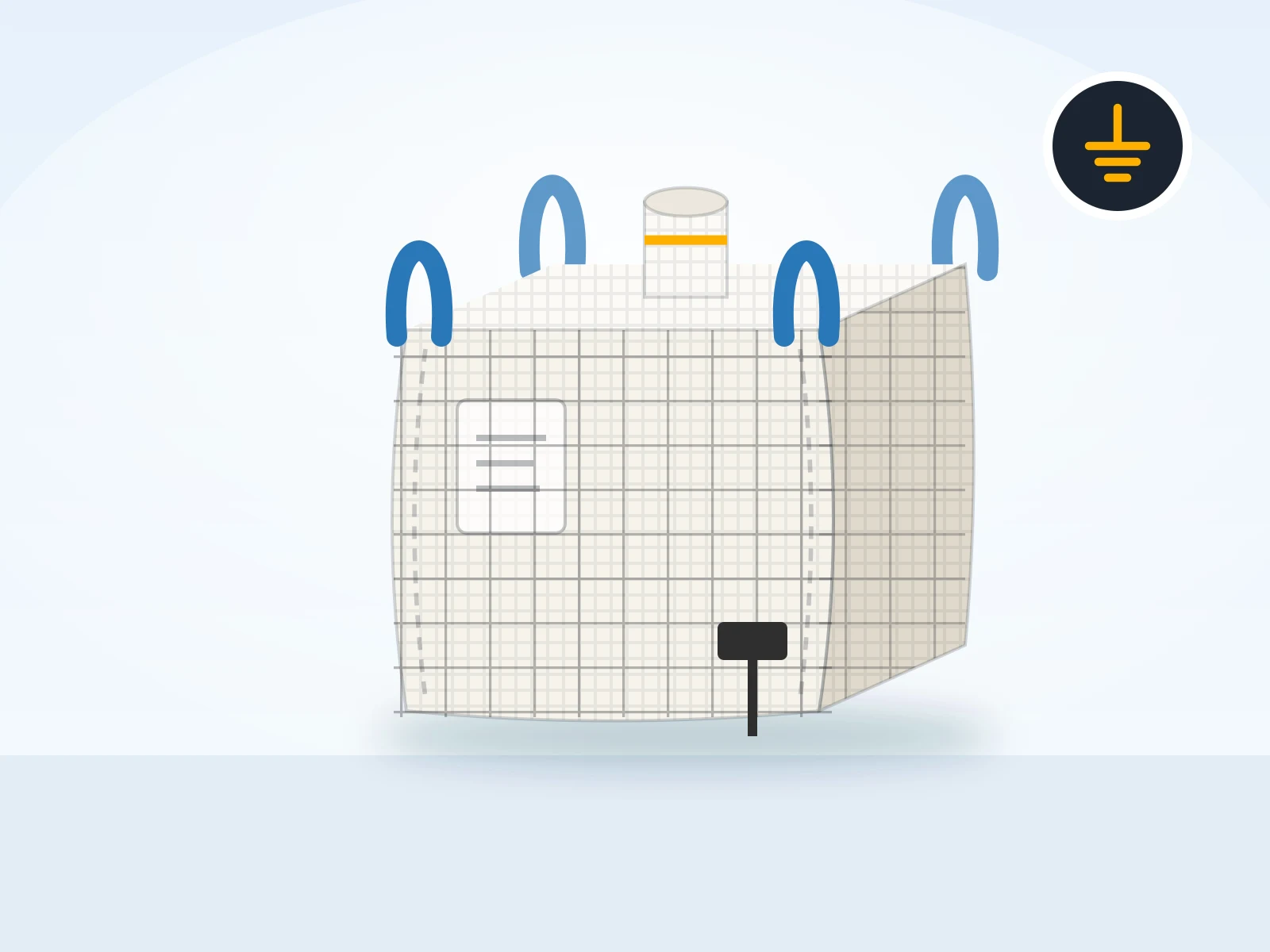
Groundable bulk bags woven with conductive threads that carry static charge safely to earth during filling and discharge.
View specifications for Type C Conductive FIBC →
Static-protective bulk bags that safely dissipate charge without a ground connection.
View specifications for Type D Anti-Static FIBC →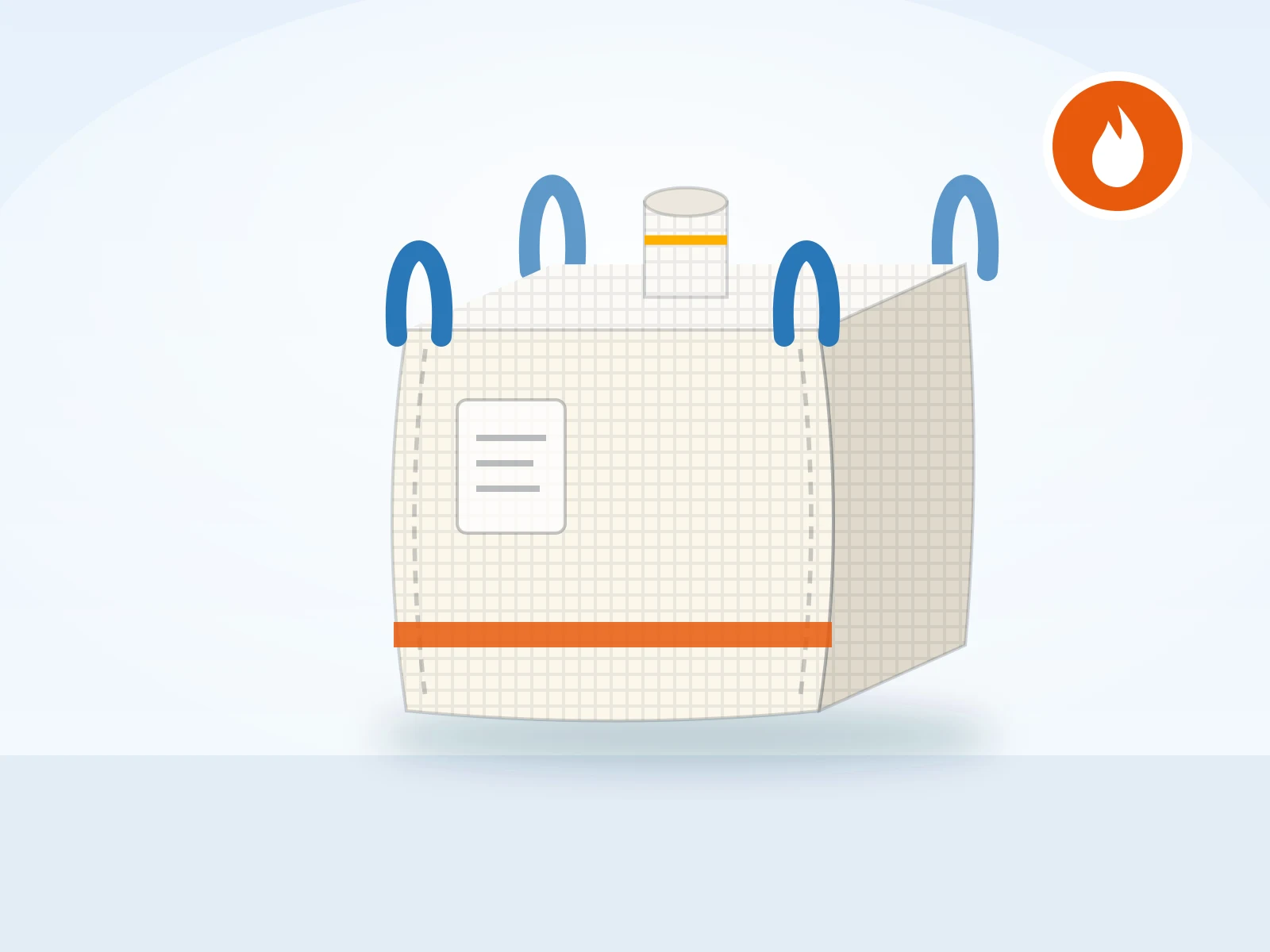
Bulk bags made from flame-retardant treated fabric that resists ignition and slows the spread of flame.
View specifications for Flame-Retardant FIBC →
Bulk bags with corrosion-inhibiting protection that keep metal parts rust-free in storage and long sea shipments.
View specifications for Anti-Corrosive FIBC →
Bags treated to deter rodents from gnawing, protecting stored grain, seed and feed from loss.
View specifications for Rodent-Repellent FIBC →
Bulk bags with closures and features that show clear signs of tampering, giving receivers confidence in cargo integrity.
View specifications for Tamper-Evident FIBC →
Lined bags with warning print for safe containment, transport and disposal of asbestos and other regulated waste.
View specifications for Asbestos & Hazardous Waste Bags →Filling or emptying fine powders can build up static charge, and in flammable atmospheres that charge can ignite dust or vapour. Type C (groundable) and Type D (static-protective) FIBCs are designed to manage that risk, and the correct type depends on your product's minimum ignition energy and the zone classification of your plant.
For dangerous goods, UN-rated FIBCs are built and tested to the requirements for the relevant packing group. Other specialty options include flame-retardant fabrics, anti-corrosive treatment for metal parts, rodent-repellent additives for long storage, and tamper-evident closures for high-value cargo.
Specialty bags are always engineered to the application. Share your safety data sheet, process conditions and the regulations that apply, and we will propose a compliant specification.
Type C bags must be connected to earth during filling and discharge. Type D bags dissipate charge safely without grounding. The choice depends on your process, product and hazardous-area classification, so it should be confirmed with your site safety team.
UN-rated bags are offered on request for specific products and packing groups. Certification details are shared for each approved specification.
Often yes. For example, a Type D bag can include a liner and discharge spout. Some combinations are restricted for safety reasons, which we will flag during specification.
Send us your product, fill weight and quantity, and we'll recommend a construction and prepare a quotation.